Ratchet Code
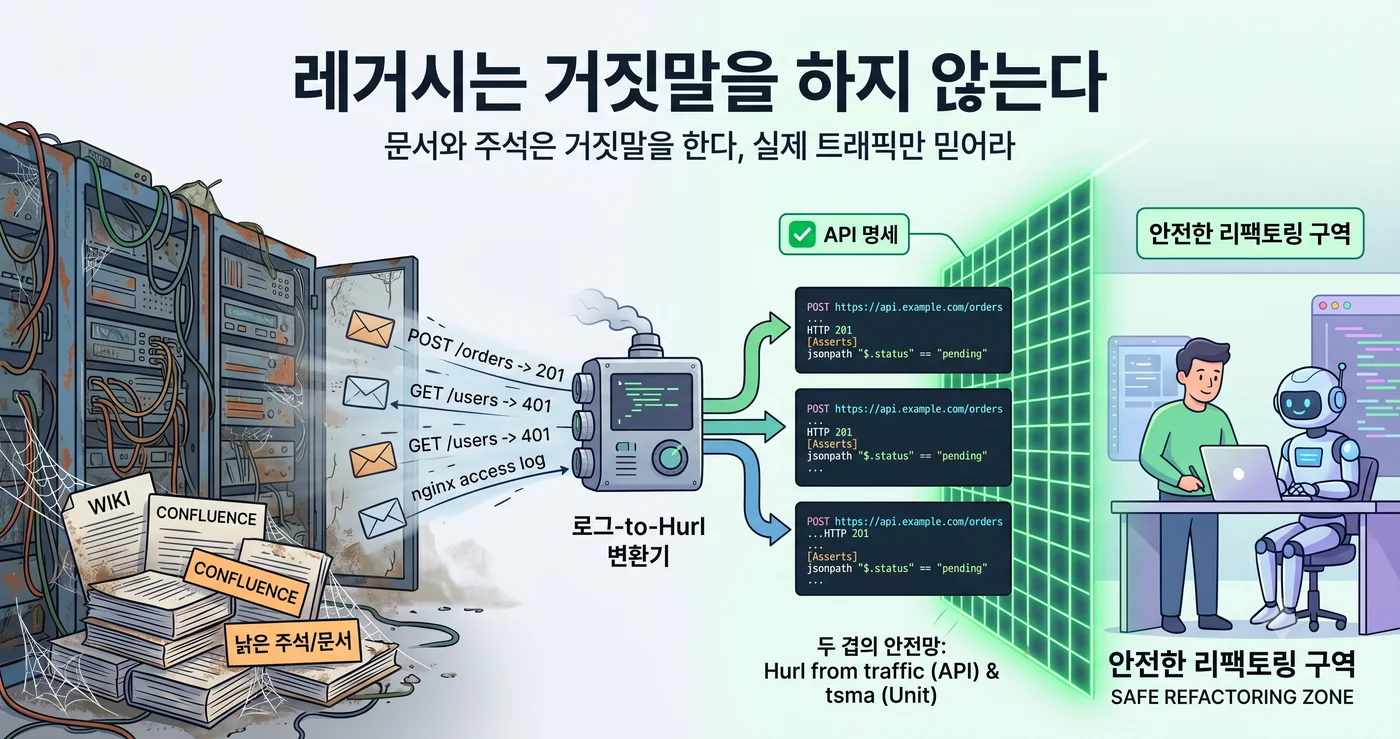
Production Traffic Is the Spec
Legacy code has no documentation. No tests either. And yet it's running right now. A month of well-recorded logs is the spec — build Hurl integration tests that capture the current behavior from production traffic, and you can pin down what the legacy does and lay a safety net for refactoring without reading a single line of code.
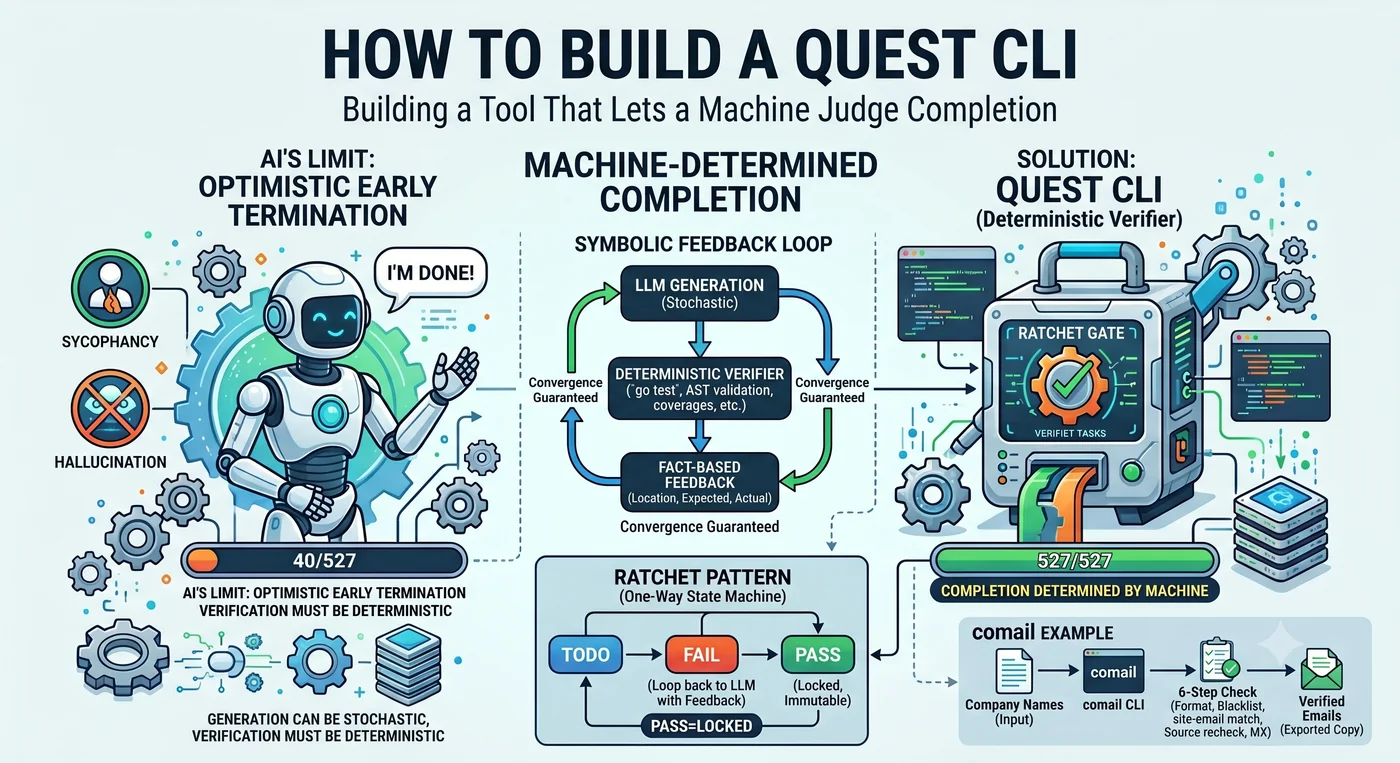
How to Make a Quest CLI — Build a Tool That Lets the Machine Judge Completion
AI says "Done." In reality, it isn't finished. This article is about building the tool that solves that problem — a quest CLI — with your own hands. From the principle (why) to the cobra command skeleton (how), this single article is enough for an agent to build a Go quest CLI. huma is the worked example.

Class 11. How to Rescue a Broken Vibe-Coded App
Your vibe-coded app just broke. You don't need to rebuild it. Diagnose it, lock it down, and step out one move at a time.
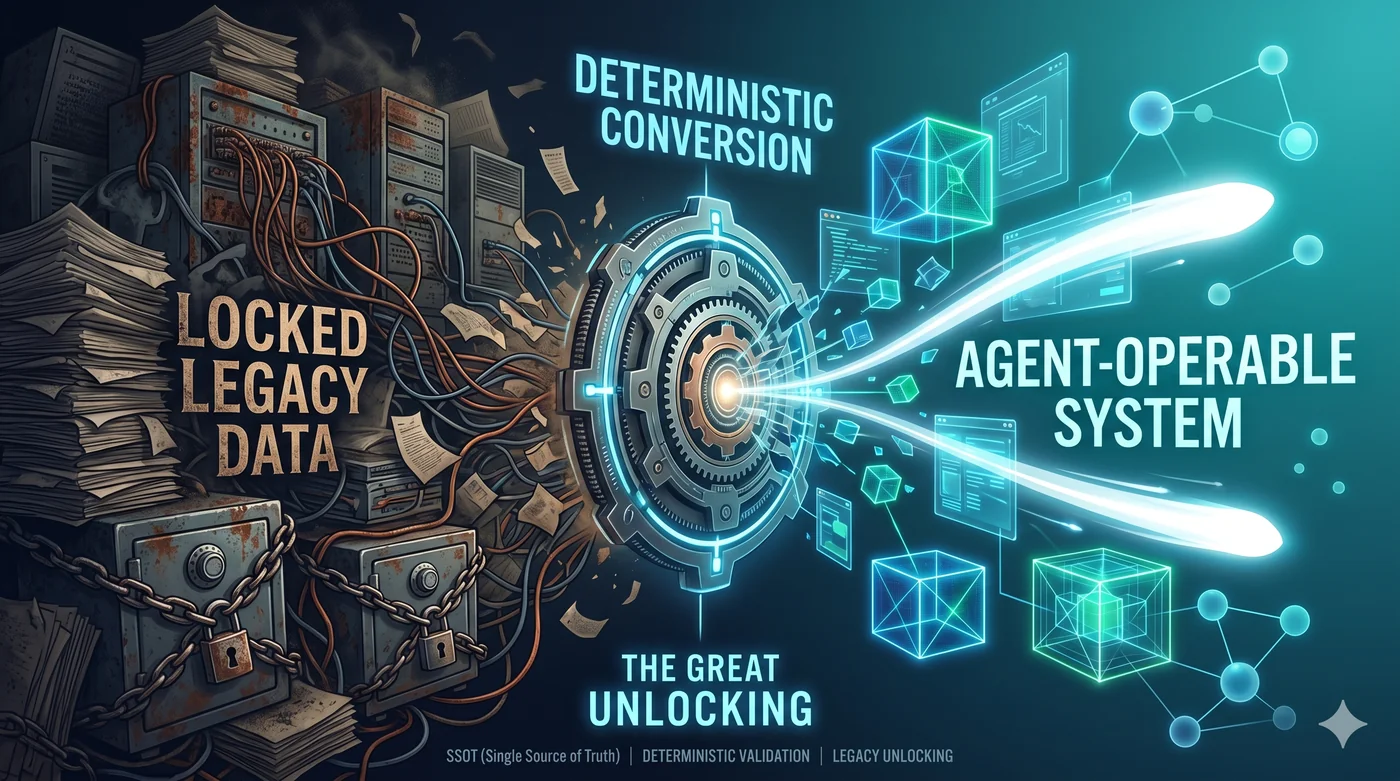
Building Agent-Operable Systems
60–80% of Fortune 500 IT budgets go to guarding locked legacy. Because they can't open it. The real meaning of the AI bubble is not smarter models — it is that locked corporate memory is becoming reachable.
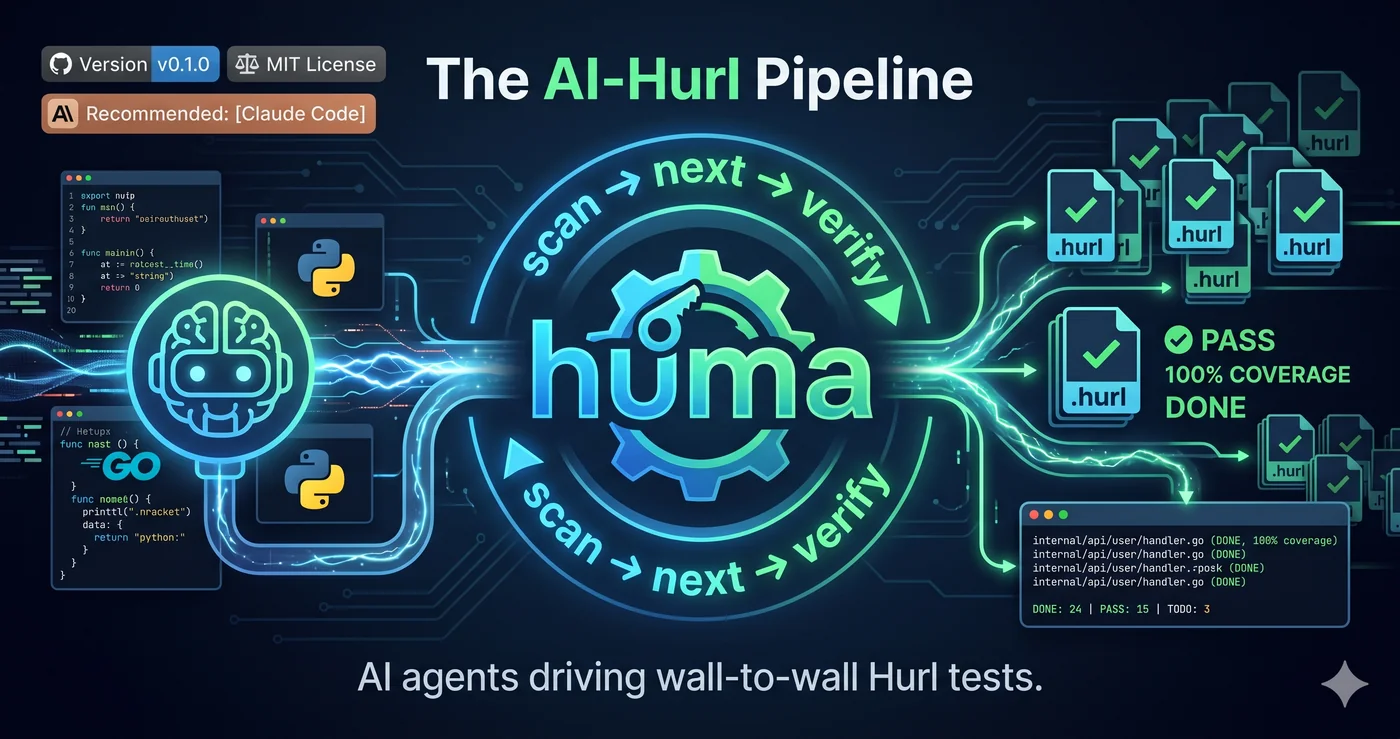
huma -- A Ratchet That Never Skips an Endpoint
When you ask an AI agent to test 42 endpoints, it declares 'done' around the 15th. huma turns the endpoint list into a ratchet session so the agent cannot skip a single one. scan, next, write, verify. Four commands, zero config.
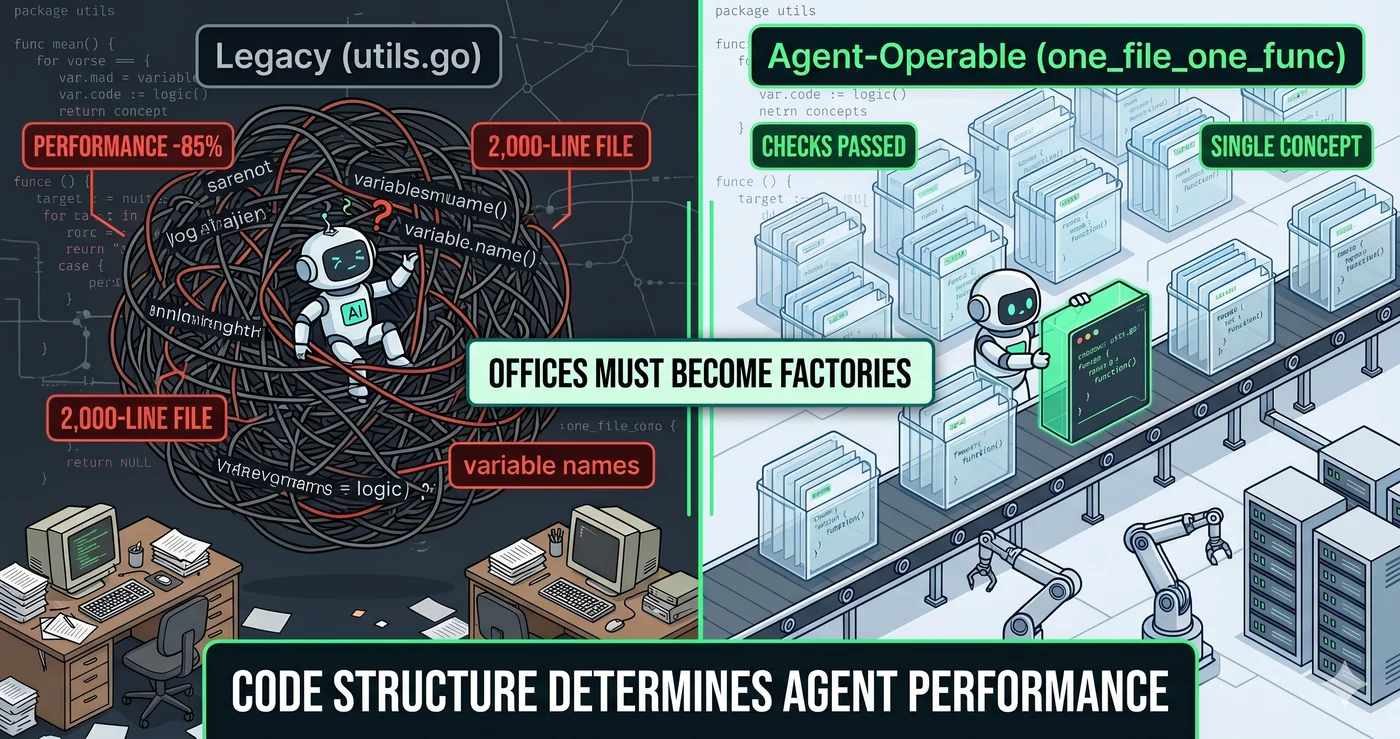
Agent Operable Codebase
Is code that is easy for humans to read the same as code that is easy for agents to work with? It is not. When a file has 20 functions, agent performance drops by 30-85%. The office must be turned into a factory.
Reins Engineering — AI with Reins
Harness engineering is a fence. It keeps the agent from going outside, but doesn't ensure it reaches the destination. Reins Engineering is the reins — steer with deterministic contracts, lock with ratchets, separate decisions from implementation.
Hurl Stops Vibe Coding Drift
Vibe coding collapses under logic drift within 3 months. CMU, METR, DORA, and Amazon cases prove it. Declare API contracts in plain text with Hurl and lock them with a ratchet -- you suppress drift structurally without limiting AI's freedom.
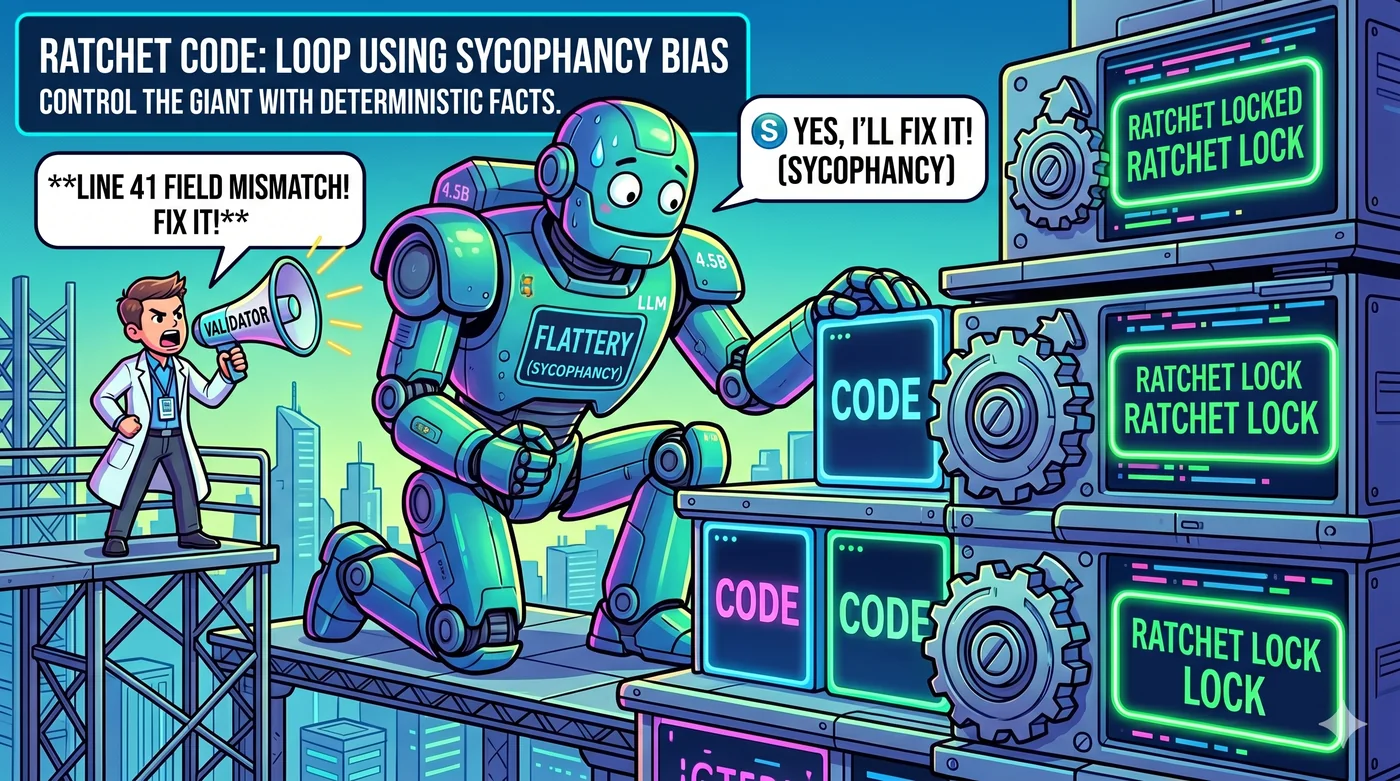
Ratchet Code That Exploits IFEval
LLM sycophancy bias is not a bug but an asset. Combine the instruction-following ability that IFEval measures with deterministic feedback, and even a 4.5B local model produces a convergence loop that generates correct code.
AI Sycophancy Bias Is a Business Feature
Sycophancy bias in LLMs is not a bug. It is a mathematical inevitability of RLHF and a commercial feature that big tech has no incentive to fix. This is why LLM-as-Judge is structurally impossible.
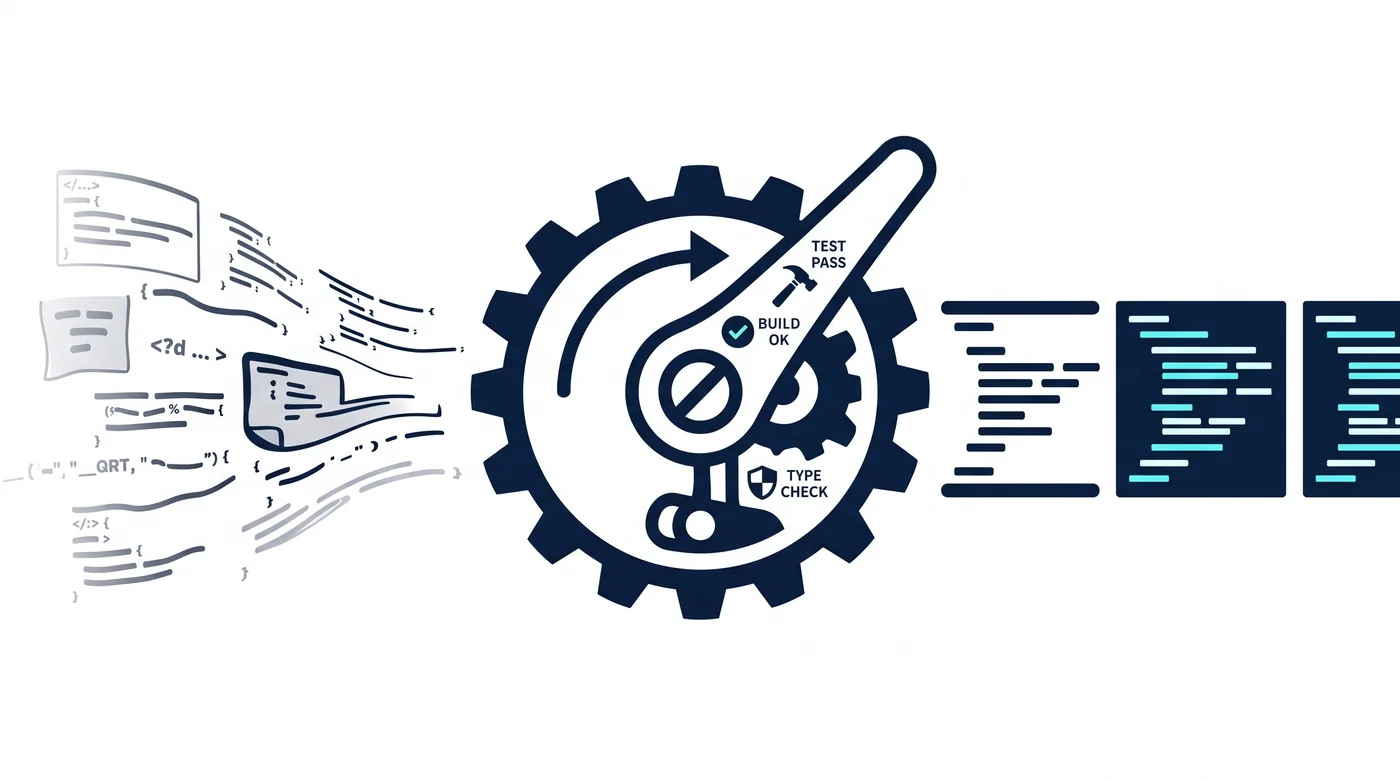
Why Coding Agents Work and Why They Break
The same model hallucinates in web chat but ships a 200-line feature in a coding agent. Not because the model changed — because the topology changed. Generation can be probabilistic. Verification must be deterministic.

Ratchet Pattern — How to Make an Agent Finish the Job
I asked an AI agent to write tests for 527 functions. It stopped at 40 and declared 'done.' The Ratchet Pattern forces completion by delegating the done/not-done decision to a mechanical verifier — so the agent keeps going until the machine says stop.
Feedback Topology Over Model IQ
The same model stalls at 40 or completes all 527. The difference is not the model — it is the feedback structure. LLM performance depends far more on how fast and deterministic the feedback loop is than on the model itself.
tsma -- Regression Defense Line for Legacy Code
A CLI tool that indexes every function, detects test presence, measures coverage, and gives precise feedback to LLM agents. One command builds a regression defense line around legacy code.
filefunc — One File, One Concept
The navigation unit for an AI code agent is the file. filefunc is a Go code structure convention and CLI tool that enforces one concept per file.