LLM

Projection Engineering: AI Has Arithmetic but No Metrology
AI can generate a decision faster than anyone can verify it. Projection Engineering supplies the missing responsibility layer that turns open-world Claims into auditable Accepted Facts before rules authorize action.
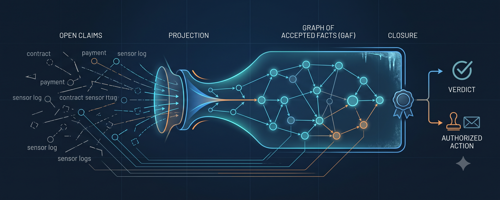
From Claims to a Graph of Accepted Facts
Before a machine can judge the real world deterministically, it must explicitly close that world: evaluate open Claims, project Accepted Facts into a traceable graph, freeze the boundary, and preserve a path to appeal.
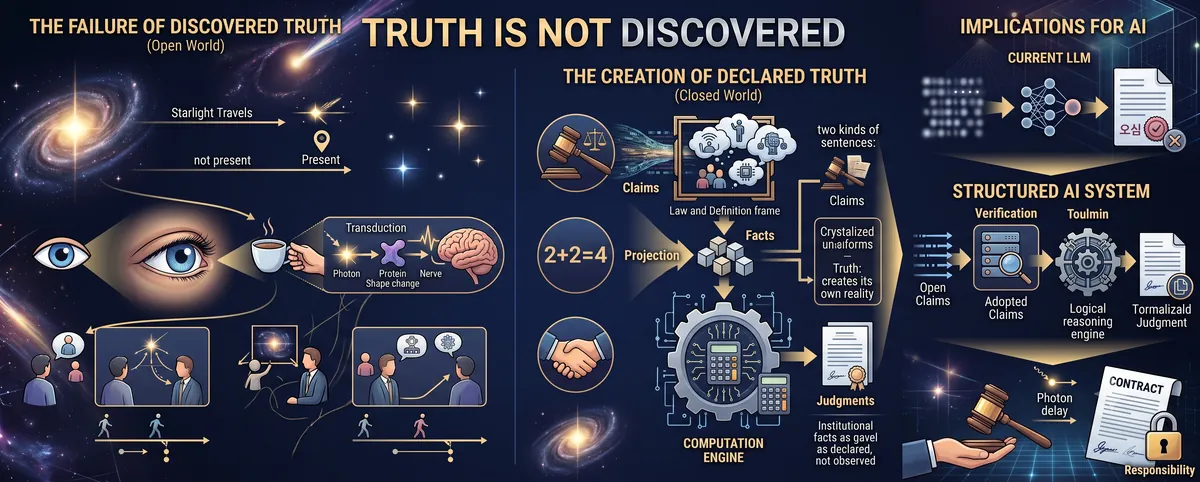
Truth Is Not Discovered
In the open world there is no truth to discover — every observation is bound by the speed of light and never reaches the event itself. But in worlds closed by declaration — fiction, mathematics, law — truth exists. A trial is the process of projecting reality into a legal world, and a verdict is a computation performed upon it. What LLMs lack right now is not a bigger model, but an explicit closure procedure like the rule of law.
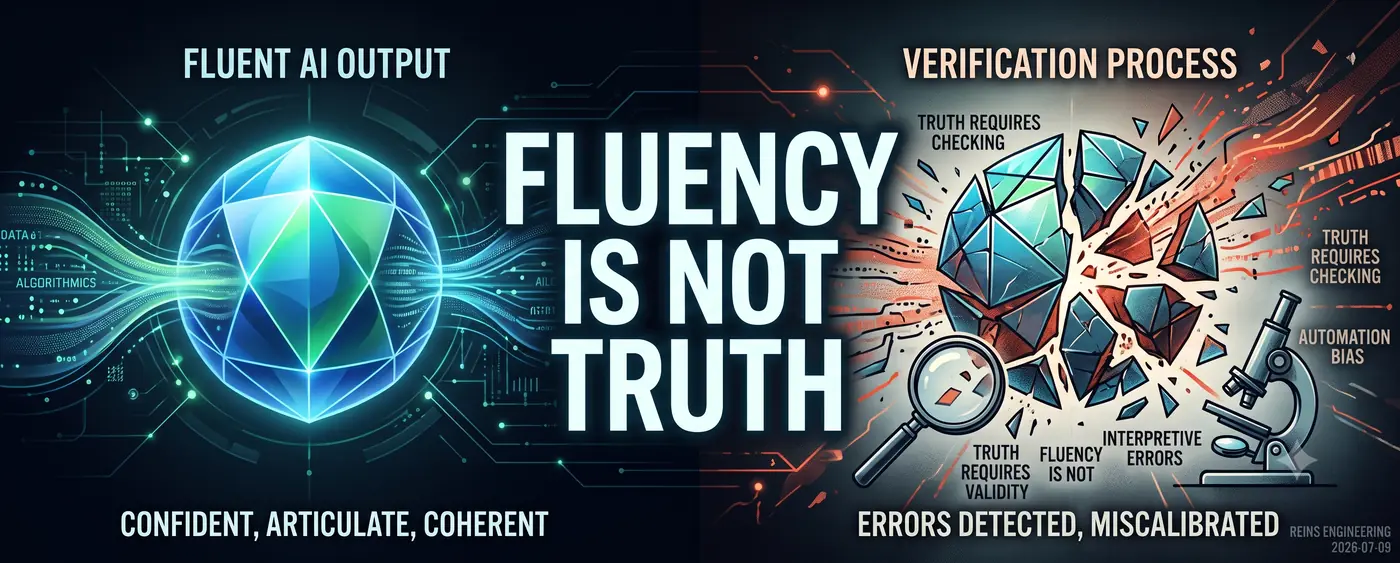
Fluency Is Not Truth
People don't miss confident, fluent AI errors because they're careless. Not noticing is the population default — measured in AI-trained physicians and in experienced developers who stayed convinced they were faster even after the data said otherwise.
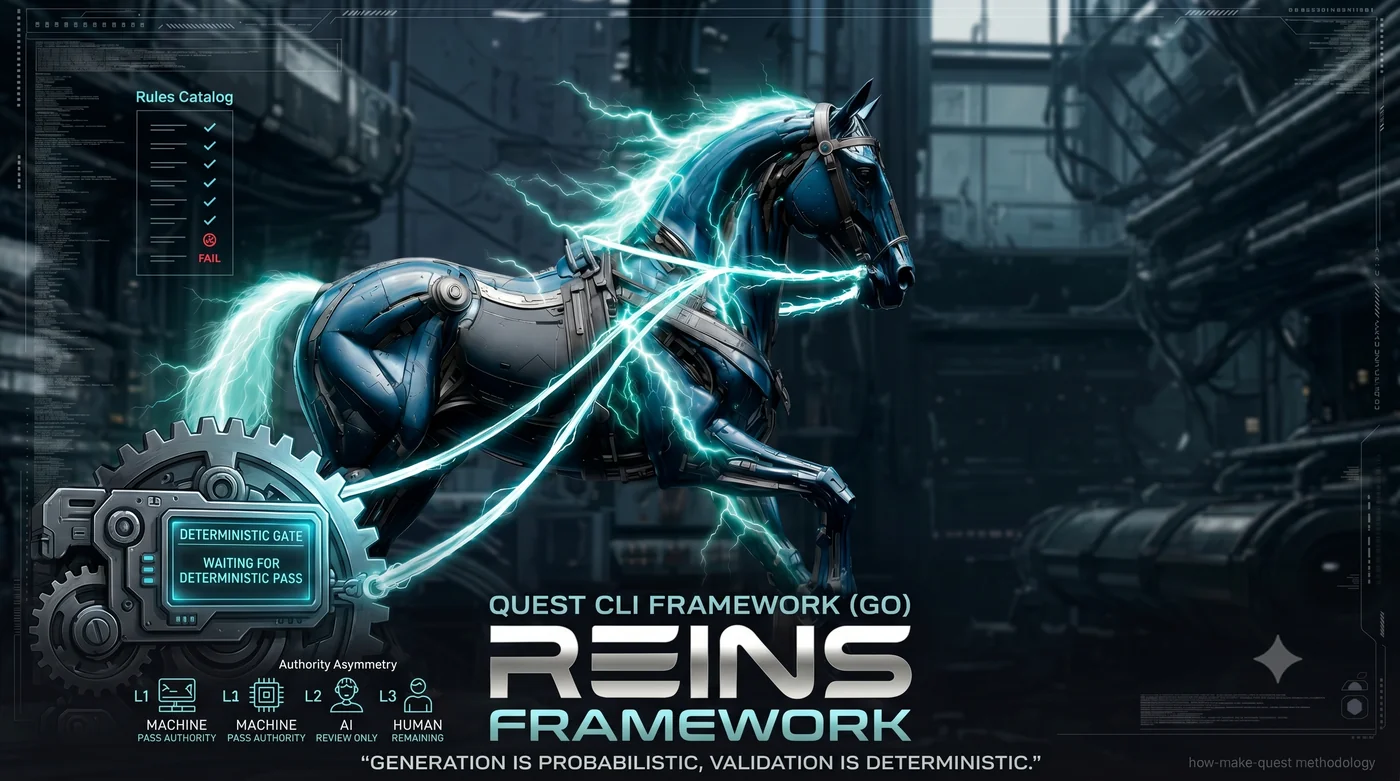
What Is a 'Turn' in reins?
An anatomy of the turn, the smallest unit of execution in reins. What is not recorded is not a turn — from this one definition, driver independence, restart resilience, and auditability all follow. Compared against the June 2026 Loop Engineering discourse, we see how the turn converts those recommendations into structure.
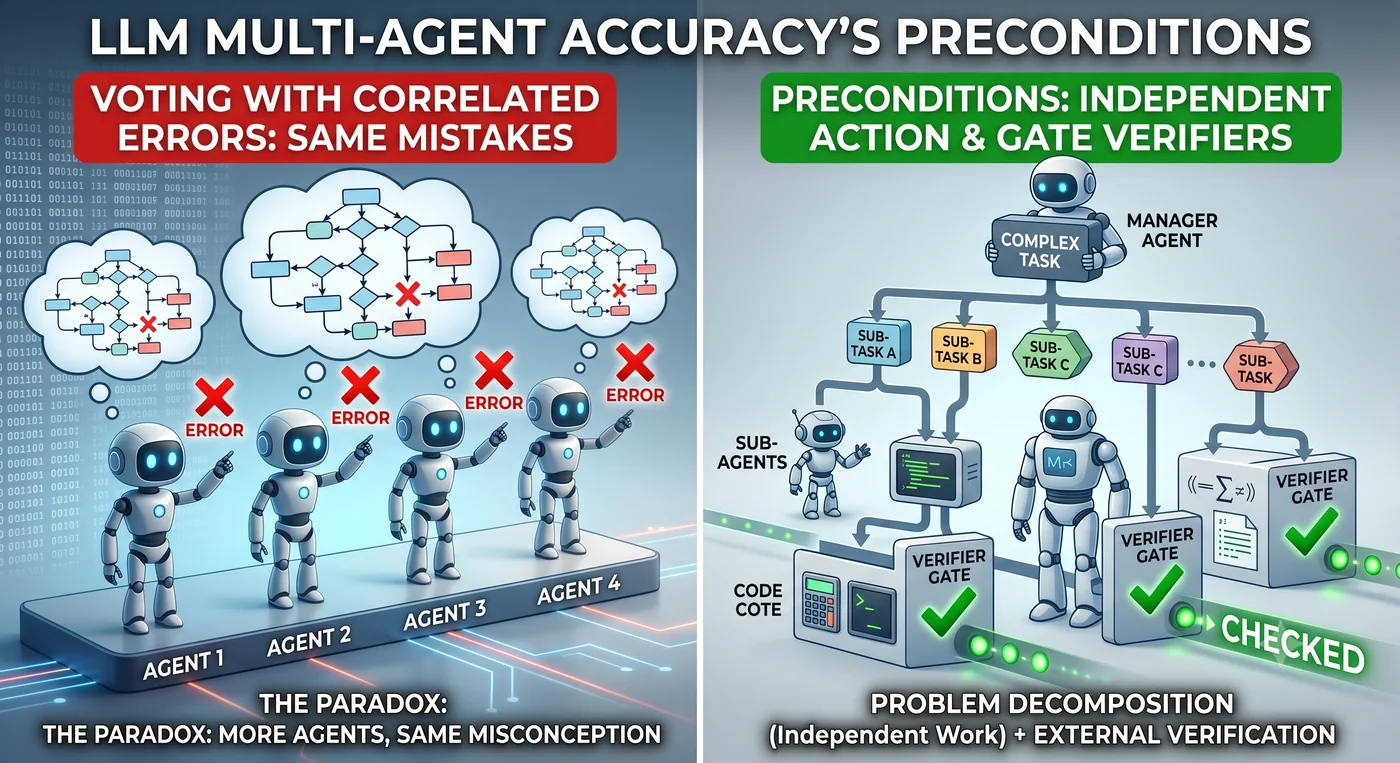
The Preconditions for Improving LLM Multi-Agent Accuracy
Run several agents and you get more accurate? Only half true. Models trained on the same data fail in the same places. Multi-agent works under two conditions — design for error independence, or, in a verifiable domain, stand up a verifier outside the LLM.
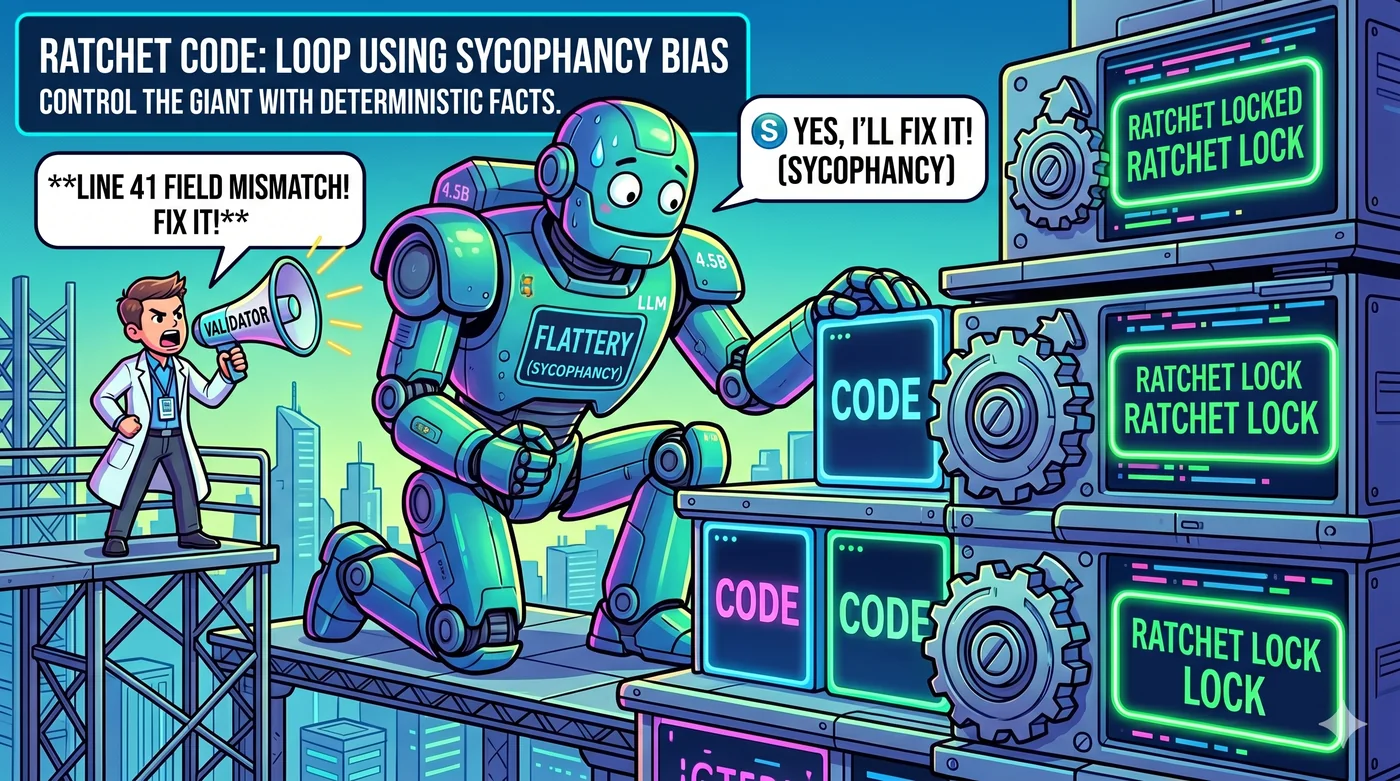
Ratchet Code That Exploits IFEval
LLM sycophancy bias is not a bug but an asset. Combine the instruction-following ability that IFEval measures with deterministic feedback, and even a 4.5B local model produces a convergence loop that generates correct code.

AI Sycophancy Bias Is a Business Feature
Sycophancy bias in LLMs is not a bug. It is a mathematical inevitability of RLHF and a commercial feature that big tech has no incentive to fix. This is why LLM-as-Judge is structurally impossible.
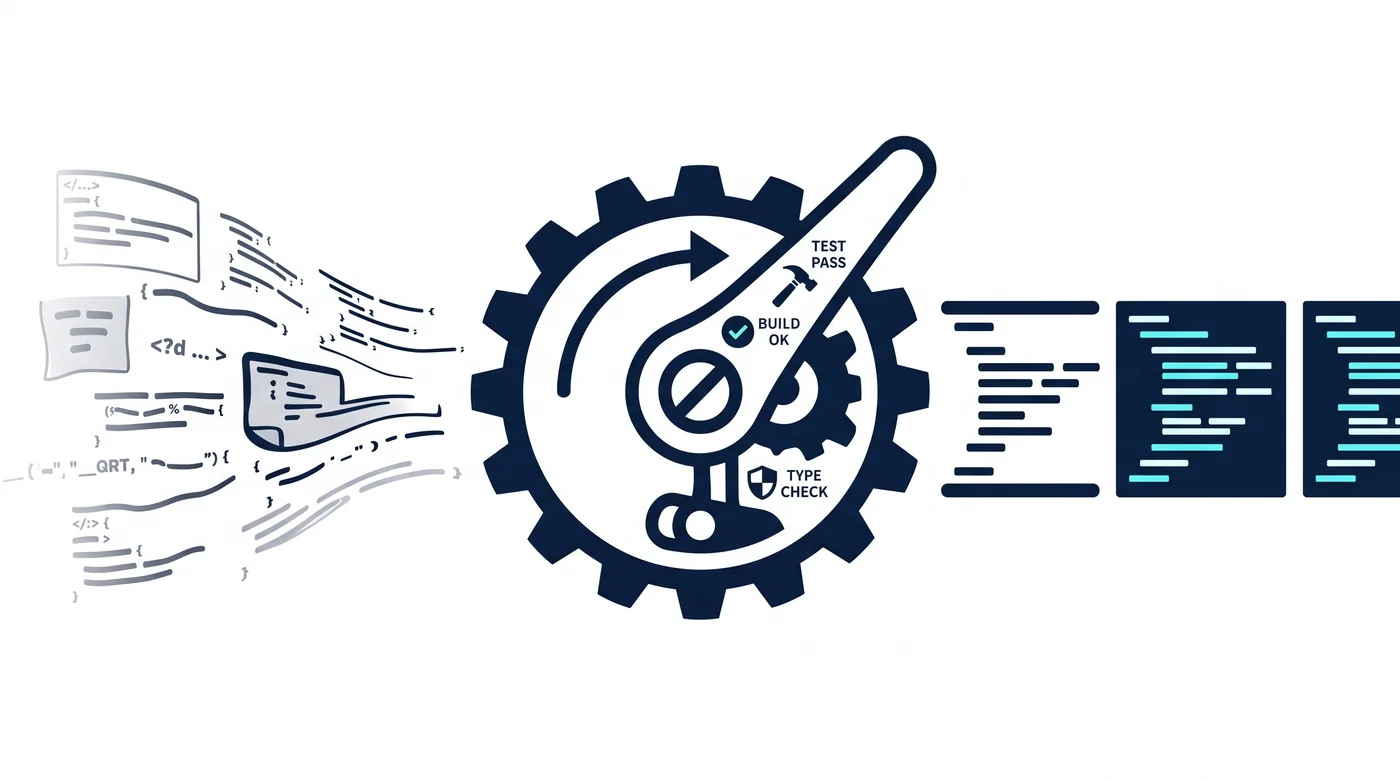
Why Coding Agents Work and Why They Break
The same model hallucinates in web chat but ships a 200-line feature in a coding agent. Not because the model changed — because the topology changed. Generation can be probabilistic. Verification must be deterministic.
Feedback Topology Over Model IQ
The same model stalls at 40 or completes all 527. The difference is not the model — it is the feedback structure. LLM performance depends far more on how fast and deterministic the feedback loop is than on the model itself.
tsma -- Regression Defense Line for Legacy Code
A CLI tool that indexes every function, detects test presence, measures coverage, and gives precise feedback to LLM agents. One command builds a regression defense line around legacy code.

Constraints Are Contracts
Without agreements there is chaos; with too many there is oppression. Rational constraints strike the golden ratio. The principles of rule of law apply equally to code and knowledge.

filefunc — One File, One Concept
The navigation unit for an AI code agent is the file. filefunc is a Go code structure convention and CLI tool that enforces one concept per file.