Go
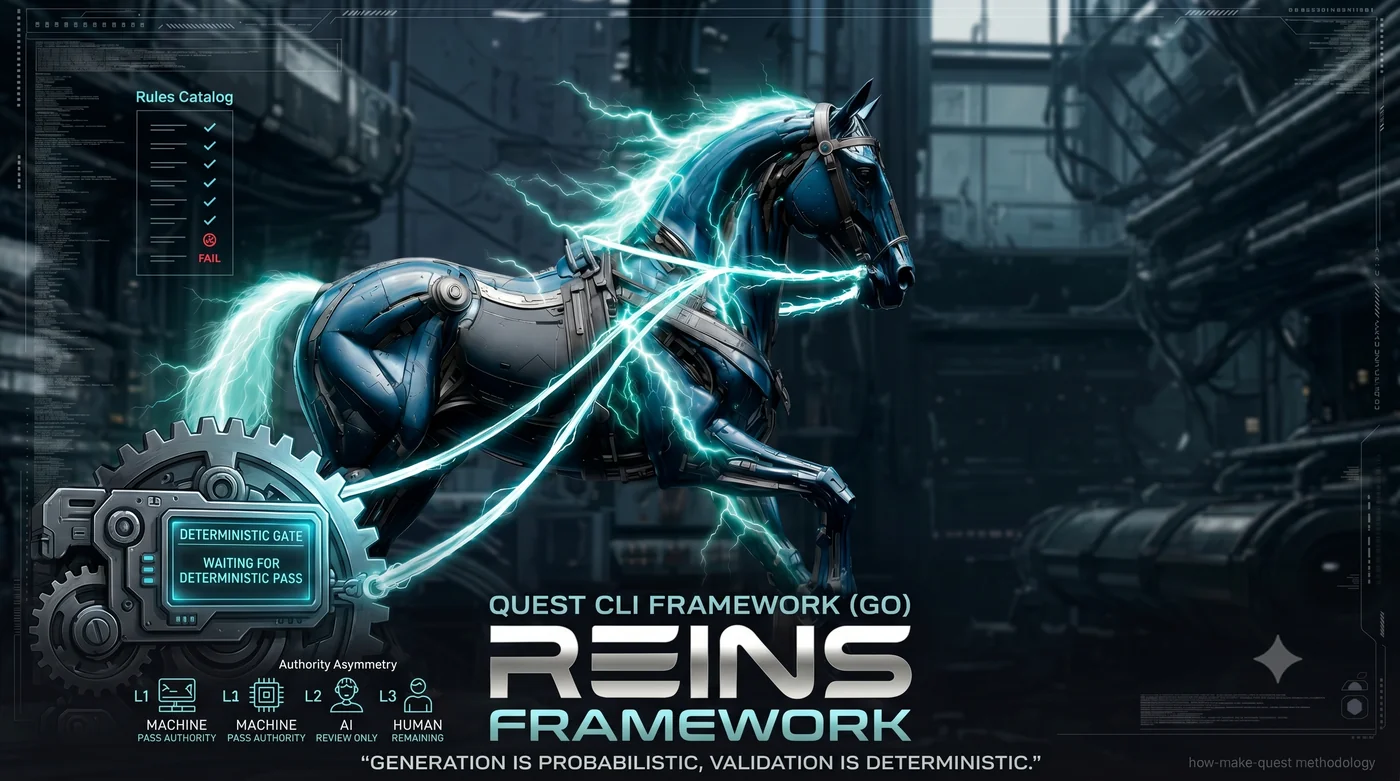
reins — Keep Only the Domain in a Quest CLI; Make the Ratchet a Framework
how-make-quest taught you to build a quest CLI with your bare hands. But build a second CLI and you write the same ratchet, the same scan/next/submit, the same tallying all over again. reins pulls that invariant out into a framework — reins supplies the ratchet, the command skeleton, the tallying, and export; you implement only your domain's gate (the four methods of gate.Definition). The gate is a catalog of cheese-defense rules, and the toulmin defeat graph hands the agent a strategy guide for 'why you lost and what to change to win.'
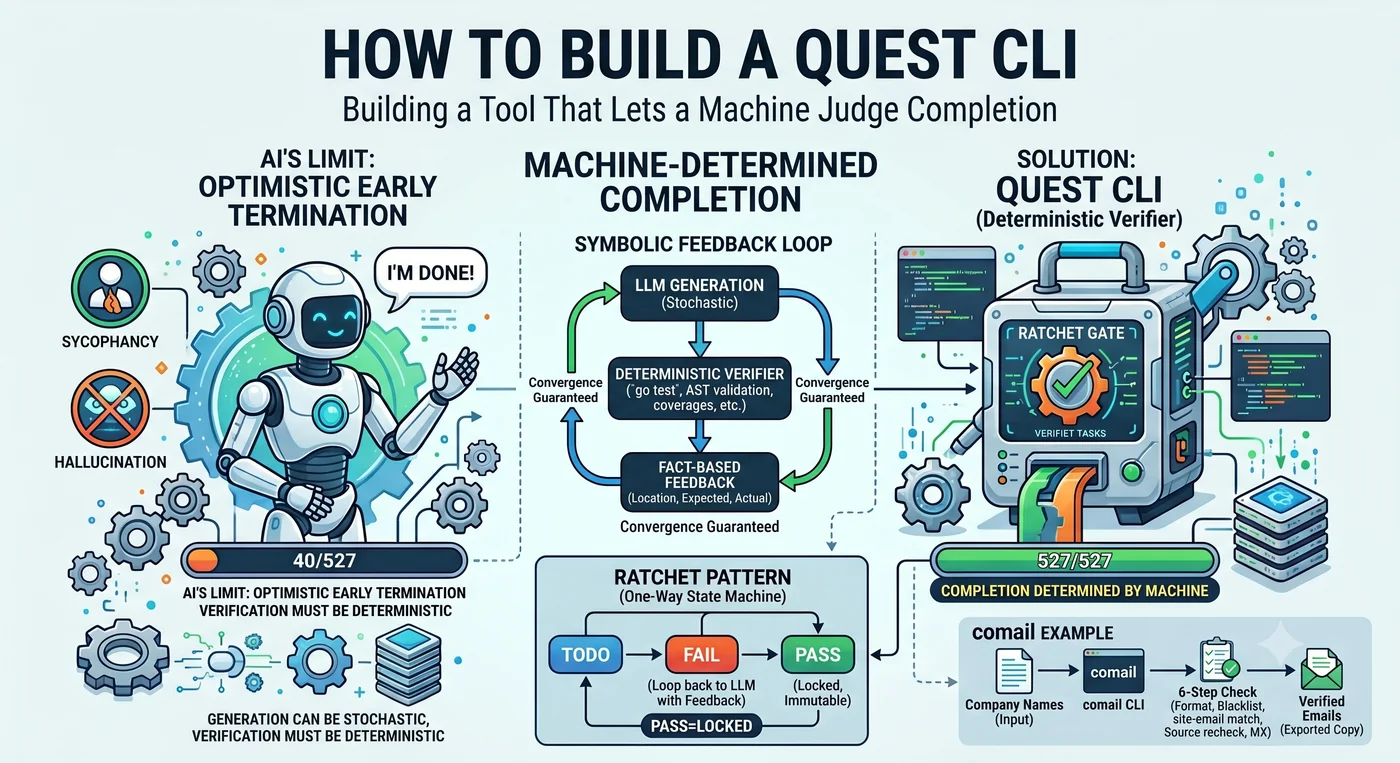
How to Make a Quest CLI — Build a Tool That Lets the Machine Judge Completion
AI says "Done." In reality, it isn't finished. This article is about building the tool that solves that problem — a quest CLI — with your own hands. From the principle (why) to the cobra command skeleton (how), this single article is enough for an agent to build a Go quest CLI. huma is the worked example.
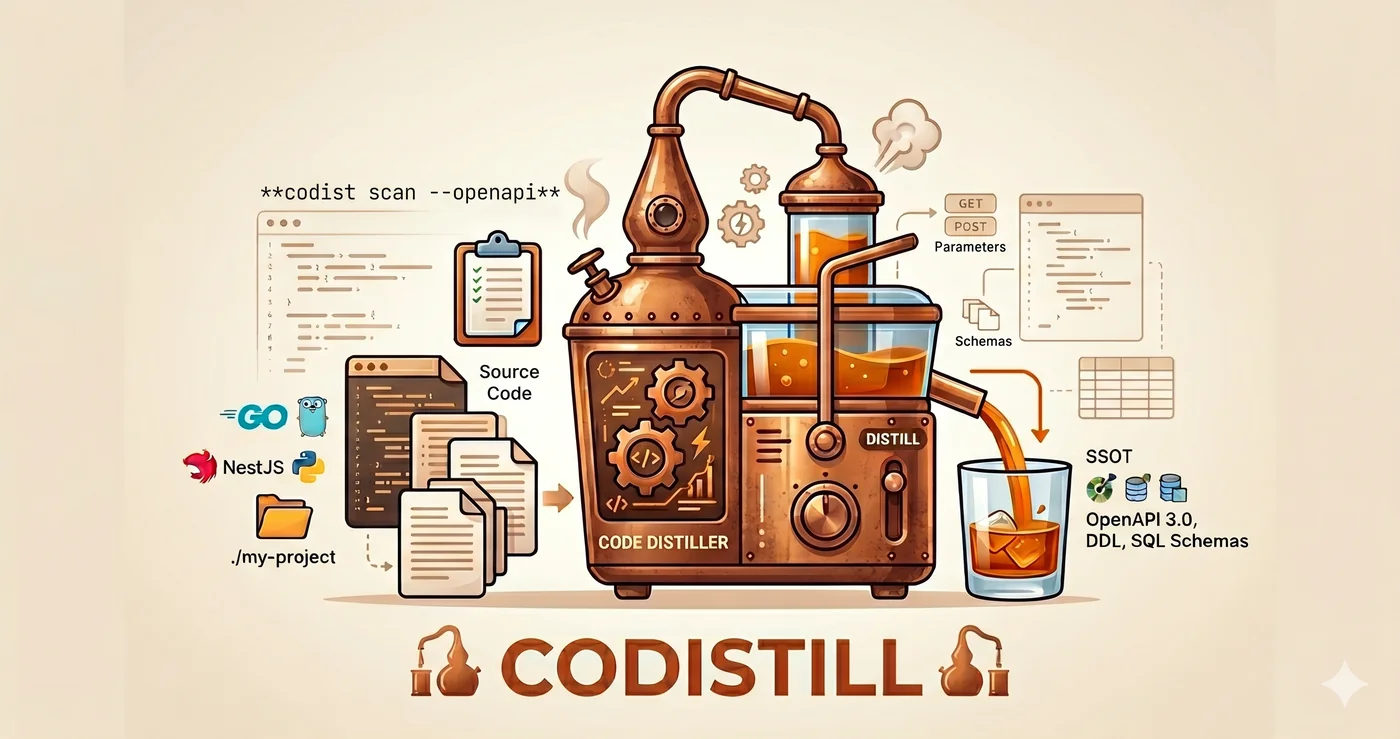
codistill -- Squeeze SSOT Out of Existing Code
Do you have to start from SSOT to use yongol? No. codistill auto-extracts OpenAPI, DDL, and sqlc queries from existing code across 16 web frameworks in 8 languages. Not foundation work -- seismic retrofitting.
toulmin — A Rule Engine That Computes Contracts
Rule engines have treated their validation targets as facts for 60 years. toulmin treats them as claims. An implementation of Toulmin's argumentation model as a Go rule engine.
filefunc — One File, One Concept
The navigation unit for an AI code agent is the file. filefunc is a Go code structure convention and CLI tool that enforces one concept per file.
SSaC — Service Sequences as Code
A language-independent concept that decomposes business flows inside service functions into declarative blocks (sequences). Declare only what with 10 fixed types, and the codegen fills in how.