Developer Tools
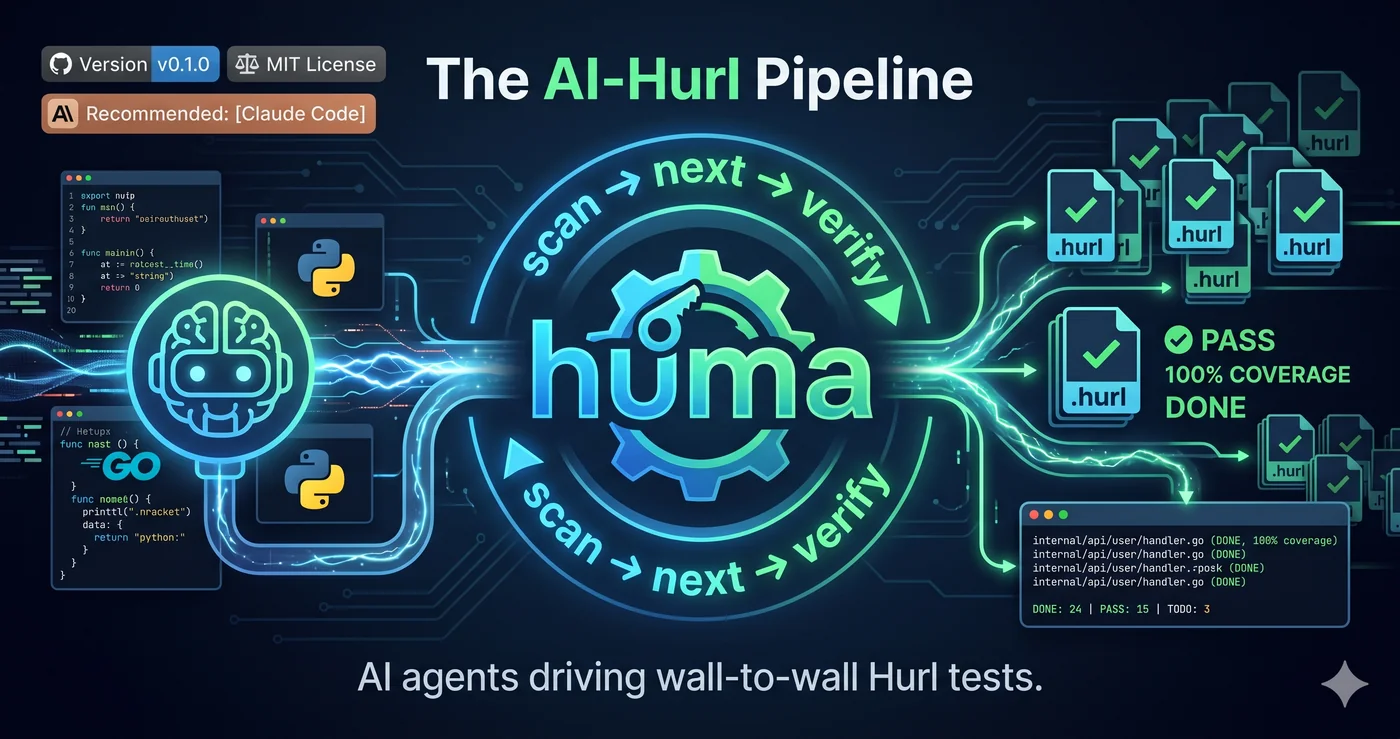
huma -- A Ratchet That Never Skips an Endpoint
When you ask an AI agent to test 42 endpoints, it declares 'done' around the 15th. huma turns the endpoint list into a ratchet session so the agent cannot skip a single one. scan, next, write, verify. Four commands, zero config.
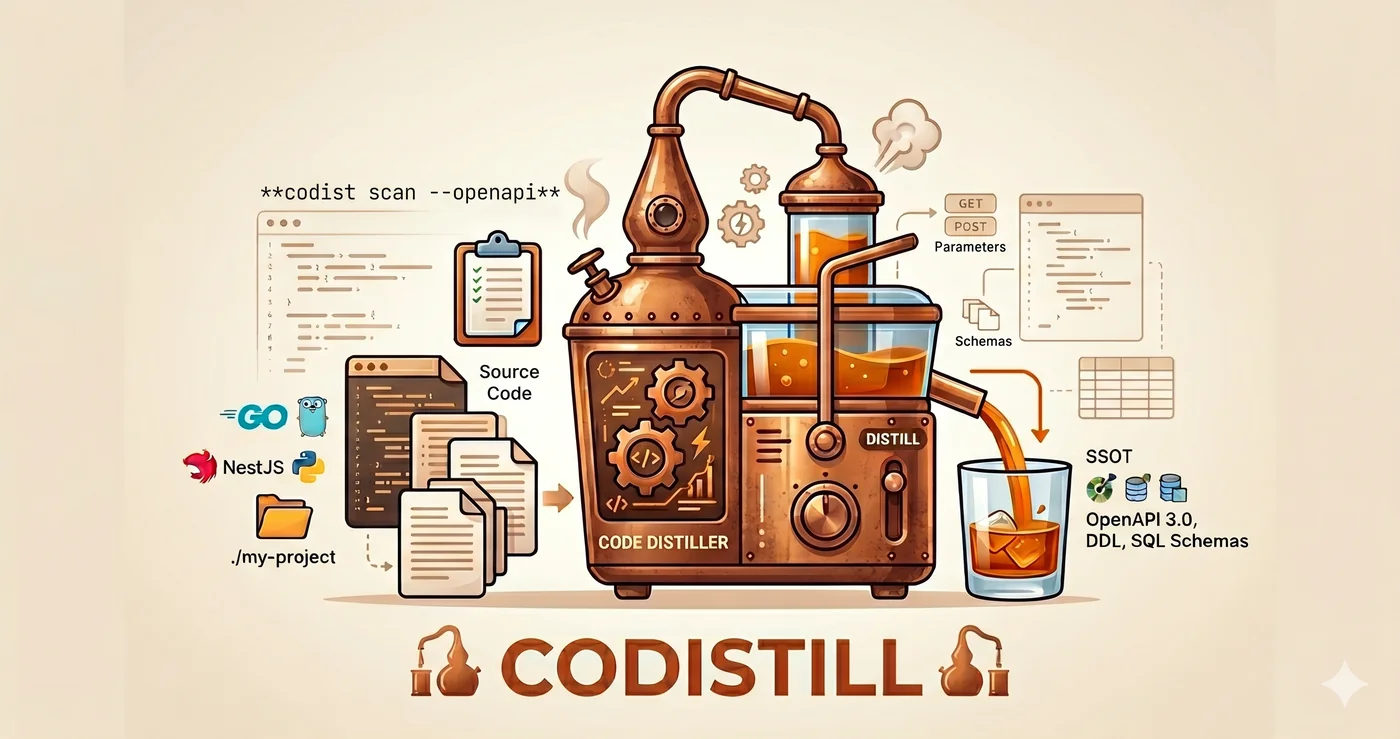
codistill -- Squeeze SSOT Out of Existing Code
Do you have to start from SSOT to use yongol? No. codistill auto-extracts OpenAPI, DDL, and sqlc queries from existing code across 16 web frameworks in 8 languages. Not foundation work -- seismic retrofitting.

yongol — The Keel of AI-Coded SaaS
Vibe coding collapses at 200 endpoints because AI cannot distinguish decisions from implementation details. yongol shifts the AI workload from code to 10 declarative specs and enforces cross-layer consistency before compilation. Harness with reins.
Ratchet Pattern — How to Make an Agent Finish the Job
I asked an AI agent to write tests for 527 functions. It stopped at 40 and declared 'done.' The Ratchet Pattern forces completion by delegating the done/not-done decision to a mechanical verifier — so the agent keeps going until the machine says stop.
Feedback Topology Over Model IQ
The same model stalls at 40 or completes all 527. The difference is not the model — it is the feedback structure. LLM performance depends far more on how fast and deterministic the feedback loop is than on the model itself.
tsma -- Regression Defense Line for Legacy Code
A CLI tool that indexes every function, detects test presence, measures coverage, and gives precise feedback to LLM agents. One command builds a regression defense line around legacy code.
filefunc — One File, One Concept
The navigation unit for an AI code agent is the file. filefunc is a Go code structure convention and CLI tool that enforces one concept per file.
Feature Chain — Tracing the full stack with one operationId
Which files do you need to touch to modify a single feature? Feature Chain takes one operationId and automatically extracts the entire scope — API spec, DB schema, authorization policy, state diagram, function implementations, test scenarios, and frontend.
whyso — What git blame doesn't tell you
git blame tells you who changed what and when. whyso tells you why. A tool that automatically extracts per-file change history from Claude Code session data.