Agent Operable
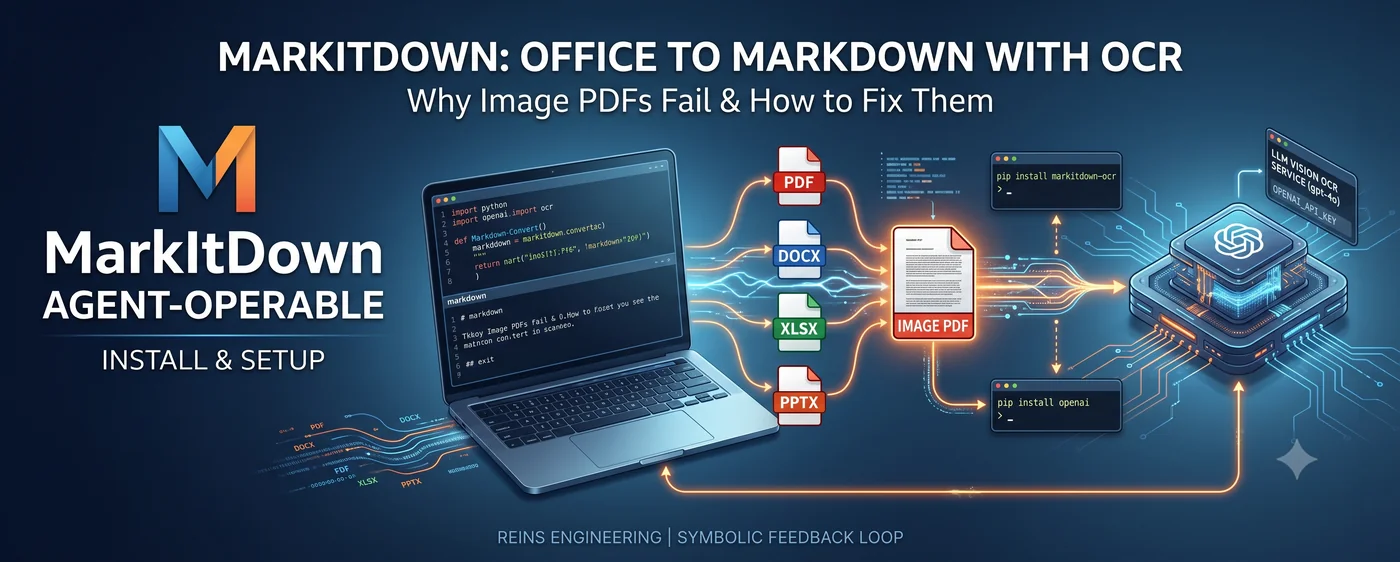
Installing and Using MarkItDown — Why Image-Only PDFs Fail, and How to Bolt On OCR
The reason to use MarkItDown comes down to the agent-operable condition — Microsoft's own conversion of its own formats is structurally trustworthy. Installation, usage, and how to bolt on OCR at the exact point that trust breaks: image-only PDFs.
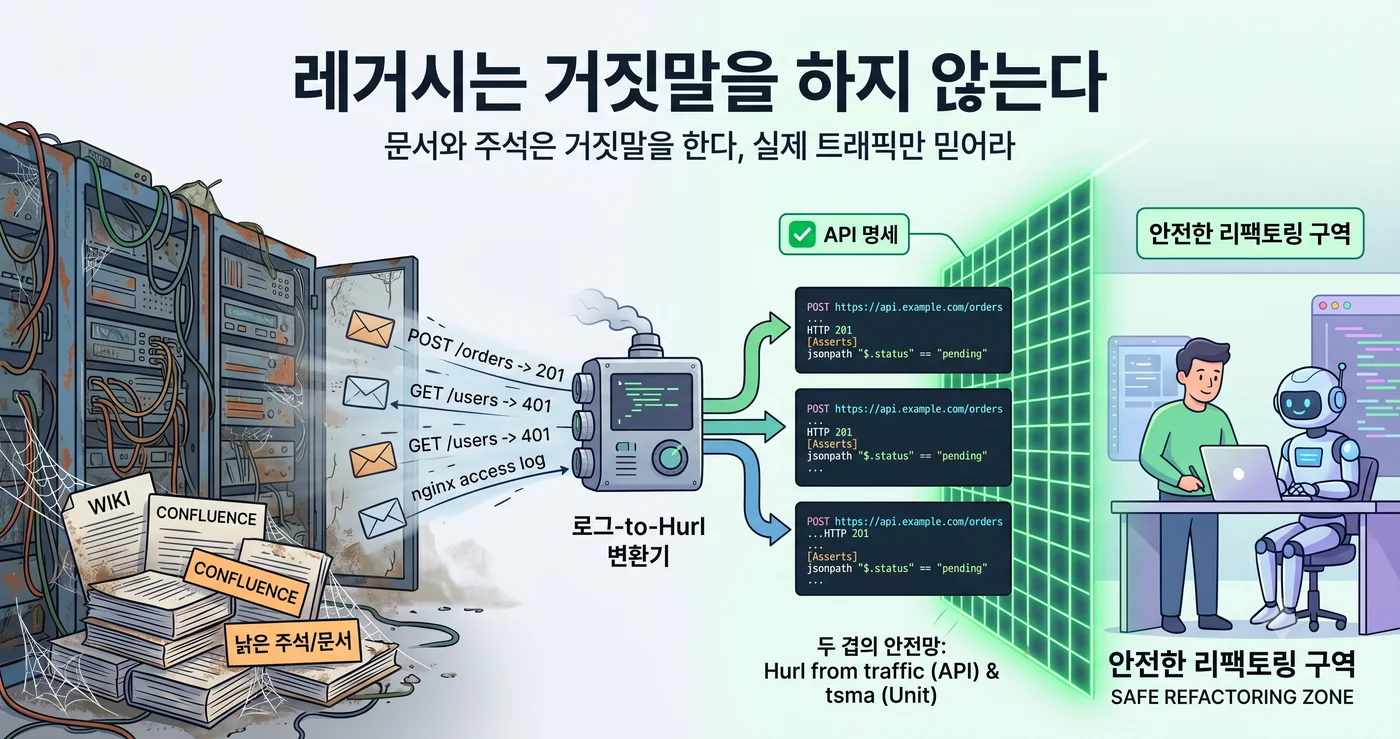
Production Traffic Is the Spec
Legacy code has no documentation. No tests either. And yet it's running right now. A month of well-recorded logs is the spec — build Hurl integration tests that capture the current behavior from production traffic, and you can pin down what the legacy does and lay a safety net for refactoring without reading a single line of code.
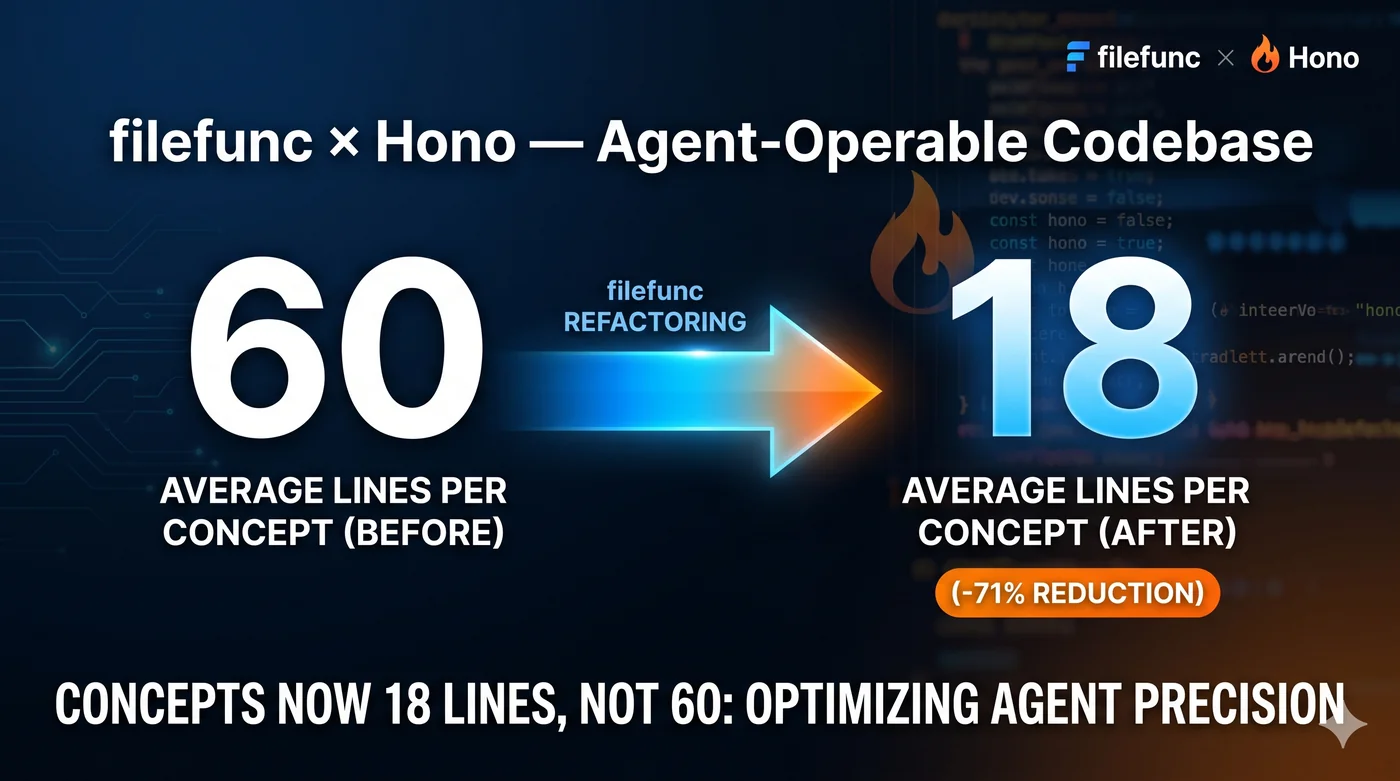
filefunc × Hono — From 60 Lines to 18: Code an Agent Reads in One Pass
I refactored Hono — a production framework with 23k stars — using filefunc. All 4,419 tests passed. Then I measured: the median lines an agent reads to grasp one concept dropped 71%, from 60 to 18. File count isn't the point — read length is.
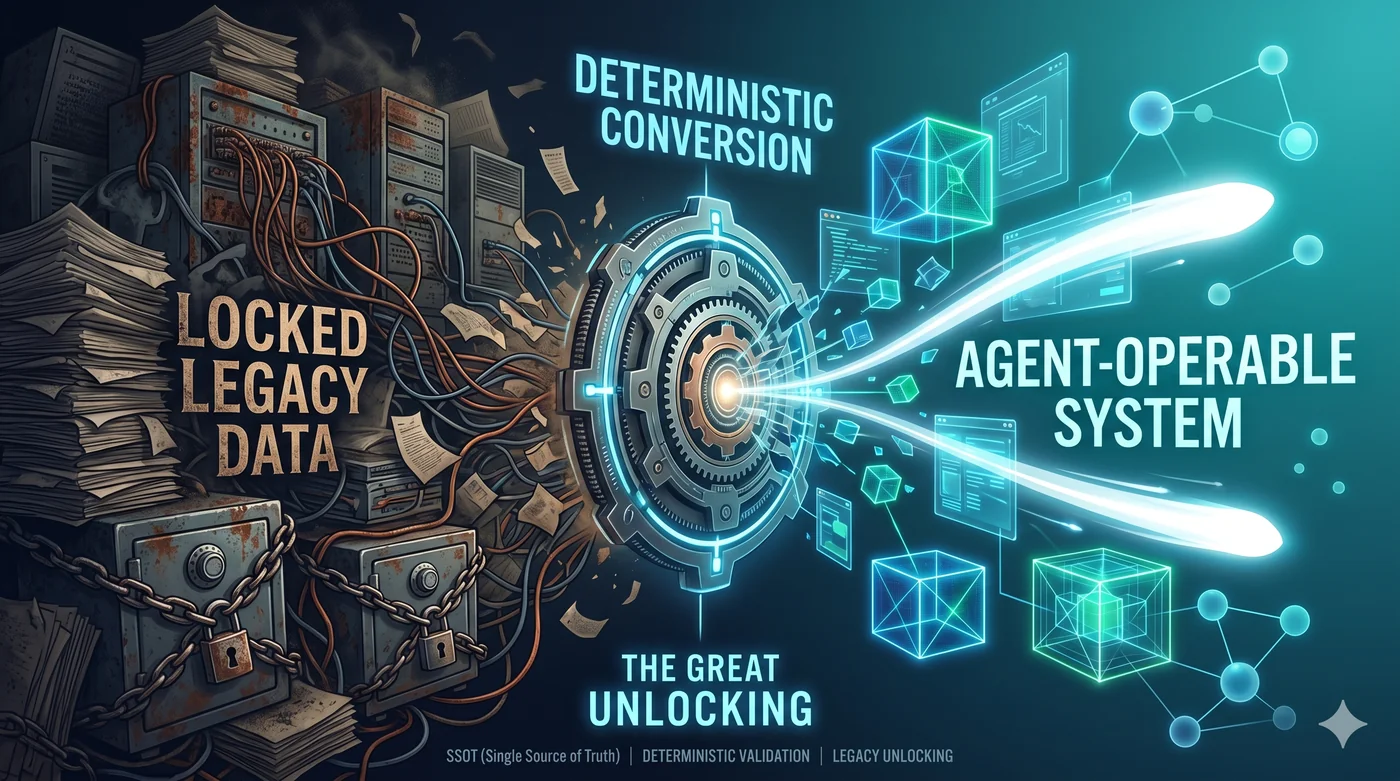
Building Agent-Operable Systems
60–80% of Fortune 500 IT budgets go to guarding locked legacy. Because they can't open it. The real meaning of the AI bubble is not smarter models — it is that locked corporate memory is becoming reachable.
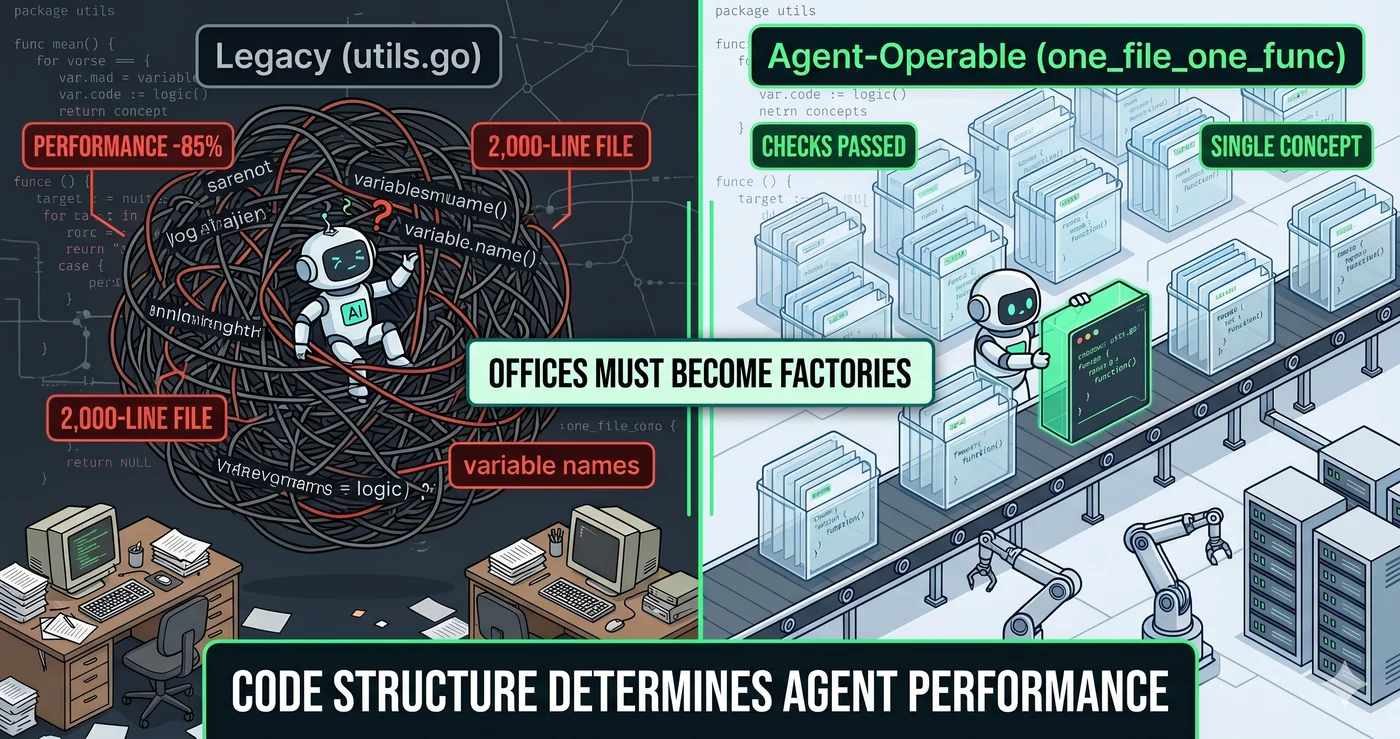
Agent Operable Codebase
Is code that is easy for humans to read the same as code that is easy for agents to work with? It is not. When a file has 20 functions, agent performance drops by 30-85%. The office must be turned into a factory.

Class 10. Law of Data — Agent Operable Data
When code is wrong, tests catch it. When data is wrong, nobody knows. Schema is the law I establish.

Class 9. Automation Beyond Code — Agent Operable System
Is agent-operable code enough? Build, deploy, monitor — the structure where agents operate the entire system.

Class 8. Agent Factory — Agent Operable Codebase
20 functions in one file → agent performance drops 30-85%. Split with filefunc, test with tsma.